
Have you ever filled an online shopping cart, imagined how exciting it would be when everything arrived, and then closed the tab without buying anything?
A new trend taking off in South Korea takes that concept to an entirely new level.
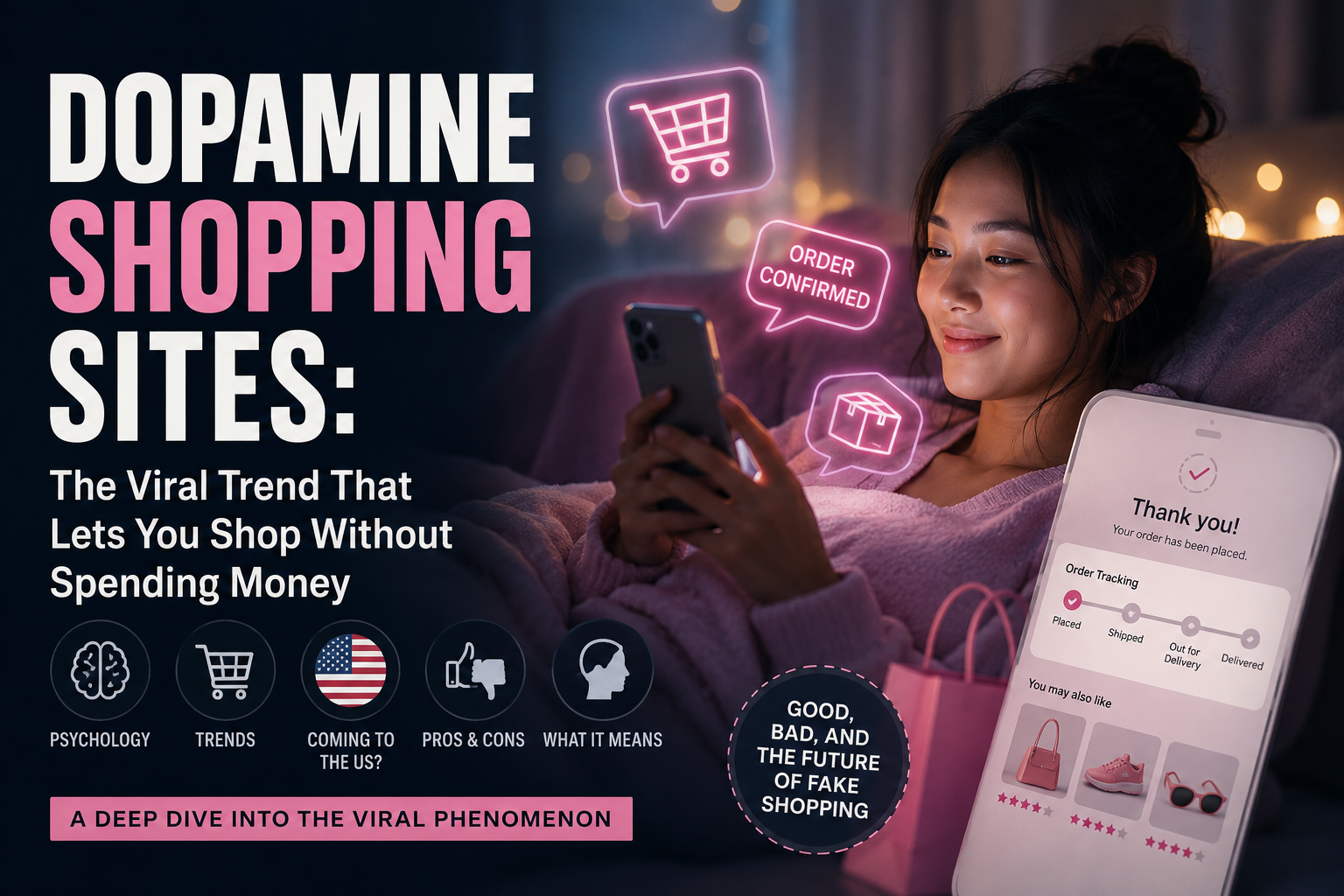
Known as “dopamine shopping sites,” these platforms allow users to browse products, add items to carts, apply discount codes, complete checkout, and even track fake orders—all without spending a single dollar.
Nothing is real. No products are shipped. No money changes hands.
Yet millions of people are fascinated by the concept.
Could these fake shopping websites become the future of impulse spending prevention? And are they coming to the United States?
Let’s take a closer look.
What Are Dopamine Shopping Sites?
Dopamine shopping sites are websites designed to recreate the emotional experience of online shopping without requiring actual purchases.
Users can:
- Browse products
- Read reviews
- Add items to a cart
- Apply coupons
- Complete checkout
- Track deliveries
The only catch?
The products don’t exist.
The entire experience is designed to simulate the anticipation and excitement of shopping while removing the financial consequences.
One of the most talked-about examples is a South Korean platform that allows users to experience the satisfaction of ordering items without spending any money.
Why Are These Sites Going Viral?
The answer lies in psychology.
Many people assume shopping addiction is about acquiring things. In reality, much of the reward comes from anticipation.
Researchers have found that dopamine—the brain chemical associated with motivation and reward—is often released before receiving a reward rather than after obtaining it.
That means:
- Browsing can feel rewarding.
- Adding items to a cart can feel rewarding.
- Clicking “Place Order” can feel rewarding.
For some shoppers, the thrill of the hunt is actually more exciting than the item itself.
Sound familiar?
Many resellers know this feeling all too well. The excitement of finding a rare item at a thrift store can sometimes be more satisfying than the actual sale.
Could Dopamine Sites Help People Spend Less?
Supporters argue that these platforms may serve as a healthier alternative for people struggling with impulse purchases.
Potential benefits include:
Reduced Impulse Spending
Users get the emotional satisfaction of shopping without draining their bank accounts.
Less Buyer’s Remorse
No accidental purchases.
No returns.
No regrets.
Financial Awareness
Some users report realizing how often they browse simply for entertainment rather than necessity.
Alternative to Retail Therapy
Instead of turning to shopping during stressful moments, people can experience a similar emotional release without creating debt.
The Potential Downsides
Not everyone believes dopamine shopping sites are a good thing.
Critics raise several concerns.
Reinforcing Shopping Habits
Even if no money is spent, users are still practicing the shopping behavior itself.
Some psychologists worry this may strengthen the same habits associated with compulsive shopping.
Escapism
Like social media, gaming, or gambling apps, dopamine sites may become another form of digital escape.
Temporary Relief
If someone is using shopping to cope with anxiety, loneliness, boredom, or stress, fake shopping may not address the underlying issue.
More Screen Time
Many people already spend hours online. These sites could create yet another digital distraction competing for attention.
Are Dopamine Shopping Sites Coming to the United States?
At the moment, there are no major American platforms dedicated solely to fake shopping experiences.
However, many existing apps already contain similar elements.
Consider:
- Pinterest wishlists
- Amazon Save for Later
- TikTok Shop browsing
- Etsy favorites
- eBay watch lists
- Poshmark likes
Millions of users already spend time browsing products they never intend to purchase.
The difference is that dopamine shopping sites intentionally remove the spending component entirely.
As awareness grows and financial pressures increase, it would not be surprising to see U.S.-based startups experiment with similar concepts.
Particularly among younger consumers dealing with inflation, student loans, and rising living costs.
What This Means for E-Commerce
This trend highlights something important for online sellers.
Consumers are not always shopping because they need something.
Often, they are seeking:
- Entertainment
- Escape
- Excitement
- Discovery
- Anticipation
The most successful marketplaces understand this.
Platforms like eBay, Poshmark, Depop, and Etsy aren’t just places to buy things—they are places to hunt for treasures.
That emotional experience keeps people coming back.
For resellers, this serves as a reminder that storytelling, unique inventory, and the thrill of discovery can be just as important as price.
Final Thoughts
Dopamine shopping sites may sound bizarre, but they reveal something fascinating about human behavior.
People aren’t always chasing products.
Sometimes they’re chasing the feeling associated with buying those products.
Whether these platforms become a long-term trend or simply a viral curiosity remains to be seen.
But one thing is clear:
The future of e-commerce may be just as much about psychology as it is about products.
And if fake shopping can satisfy real cravings, the retail industry will be paying close attention.




Leave a Reply