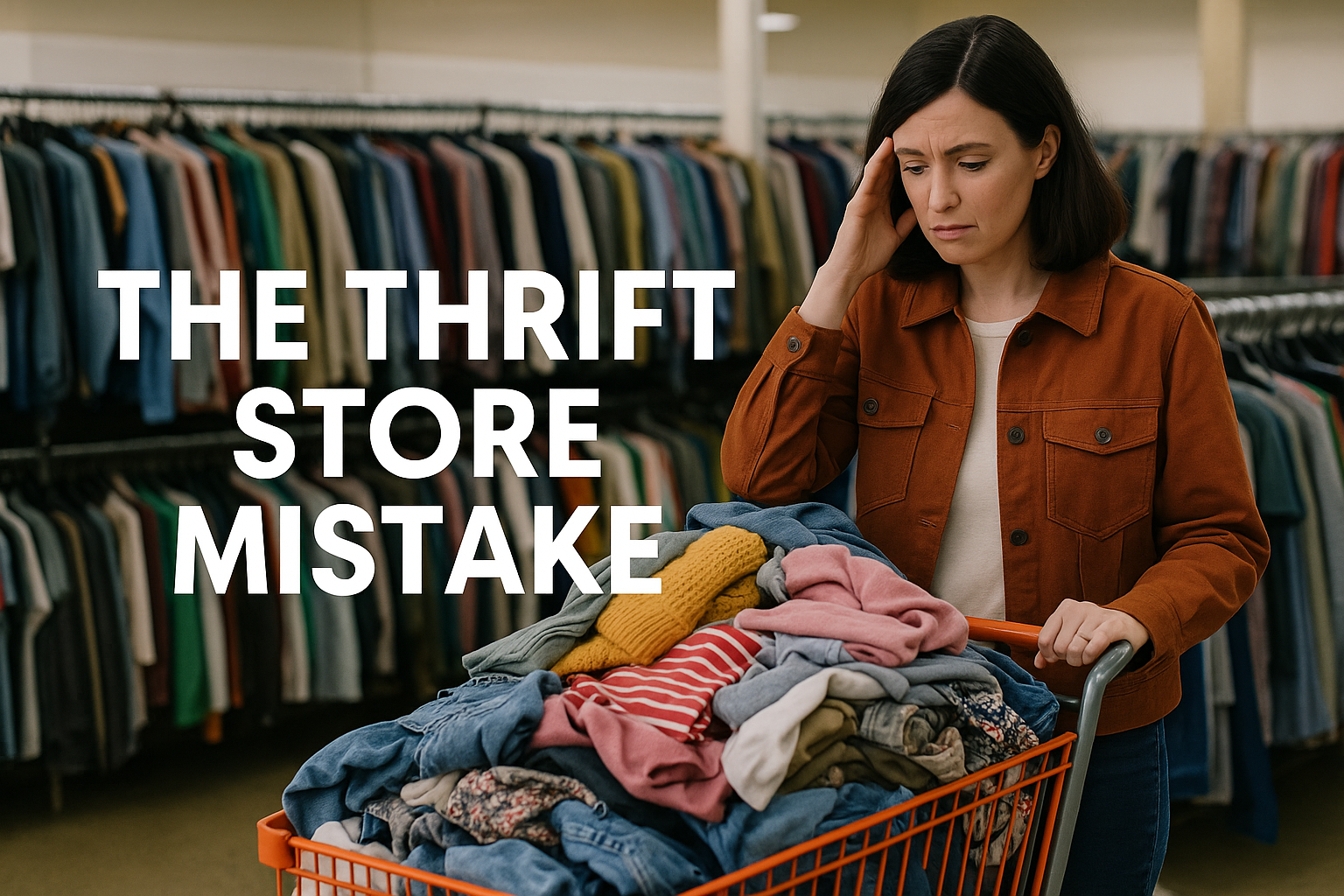

There’s one mistake I see resellers make over and over again — and most of them don’t realize it until they’re drowning in inventory.
It’s not pricing too high.
It’s not missing trends.
And it’s not sourcing “bad brands.”
It’s buying too much.
Overbuying feels productive. It feels like momentum. But in reality, it’s one of the fastest ways to slow your business down.
Especially if you’re trying to resell sustainably and build something that lasts.
––––––––––––––
What Overbuying Actually Looks Like (It’s Not What You Think)
Overbuying doesn’t always mean shopping carts overflowing with clothes.
It looks like:
• grabbing items “just in case”
• buying because something is cheap, not because it will sell
• sourcing without checking market saturation
• adding inventory faster than you can list it
This mistake is subtle — and that’s why it’s so damaging.
––––––––––––––
Why Overbuying Feels Like Success at First
Early on, buying more feels like progress.
You’re sourcing.
You’re learning brands.
You’re building inventory.
But quantity creates a false sense of security.
More items don’t equal more sales. They often equal:
• slower listing cycles
• cluttered storage
• scattered focus
• emotional burnout
This is where many resellers plateau without understanding why.
––––––––––––––
How Overbuying Hurts Profit (Beyond the Obvious)
The financial cost isn’t just what you spend at the register.
Overbuying drains profit through:
• time spent managing low-quality inventory
• markdowns to move stagnant items
• storage solutions you didn’t need yet
• returns on rushed sourcing decisions
These are the invisible leaks in a resale business.
––––––––––––––
The Shift That Changed Everything for Me
The turning point came when I stopped asking, “Is this a good deal?”
And started asking, “Is this worth my time?”
That single shift changed:
• what I sourced
• how often I listed
• how quickly inventory moved
It also forced me to get honest about what actually sells — not what looks good on a rack.
This is the same restraint I talk about in why I walk past “good brands” at the thrift store — the decision to prioritize sell-through over volume.
I Walk Past “Good Brands” at the Thrift Store — Here’s Why
––––––––––––––
How to Source With Restraint (Without Missing Good Finds)
Sourcing with restraint doesn’t mean buying nothing.
It means:
• setting clear criteria before you shop
• prioritizing fit, demand, and seasonality
• leaving “almost right” items behind
• trusting that more opportunities will come
Reselling rewards patience far more than impulse.
––––––––––––––
Why This Matters for Sustainable Reselling
Sustainable reselling isn’t just about where items come from.
It’s about:
• reducing unnecessary waste
• avoiding churn inventory
• building intentional collections
• creating a business you can maintain long-term
Buying less is better — for your business and for the resale ecosystem.
––––––––––––––
Conclusion
Overbuying doesn’t look like a mistake at first. It looks like ambition.
But the resellers who last aren’t the ones who buy the most. They’re the ones who know when to stop.
And sometimes, the smartest sourcing decision you’ll make is walking away.



Leave a Reply