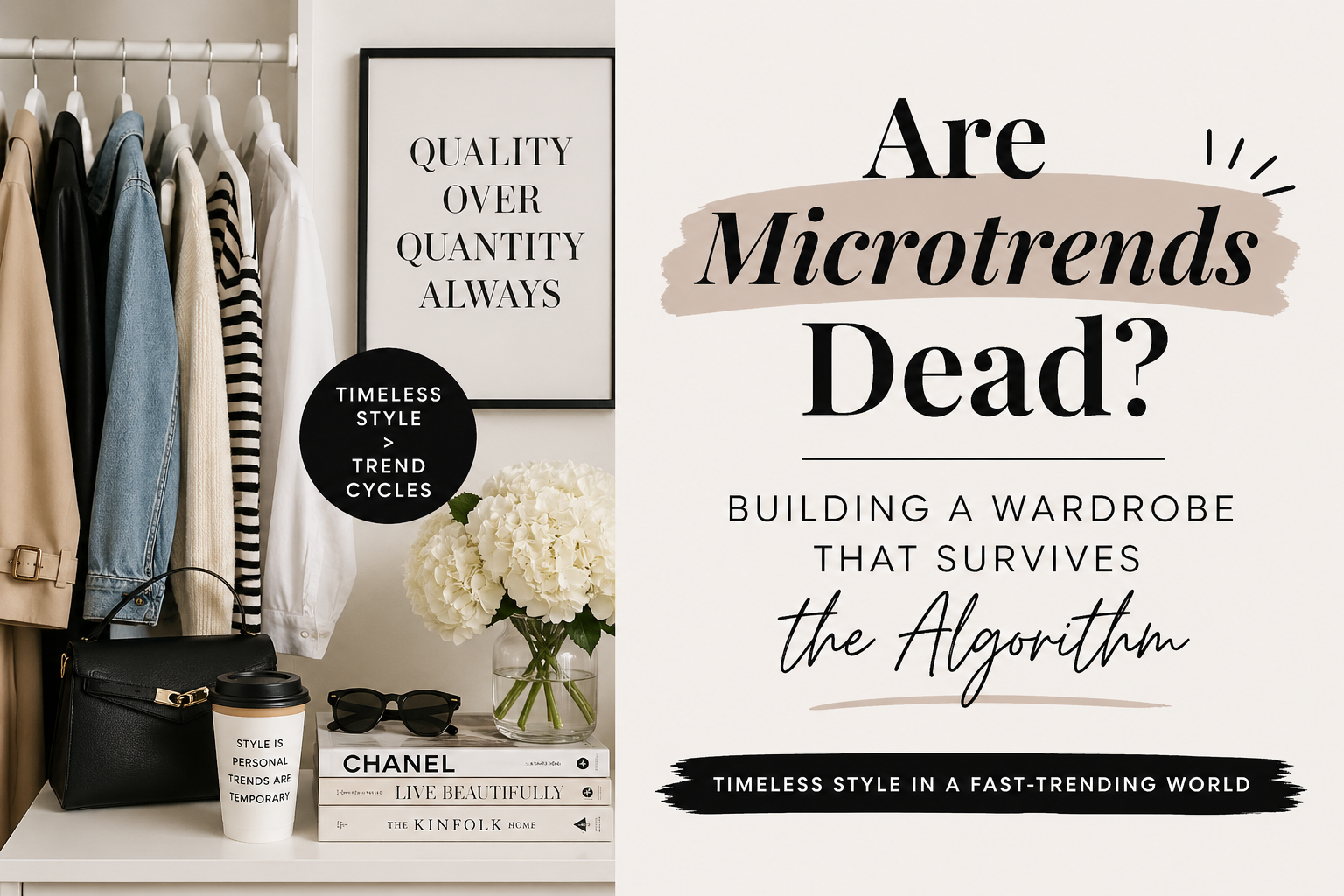

Every week the internet seems to declare a new aesthetic: Coquette, “clean girl,” office siren, coastal cowgirl, indie sleaze revival. Blink once and your feed has moved on.
So… are microtrends dead?
Not exactly. But their grip on fashion is weakening.
As trend cycles accelerate through TikTok, Instagram, and resale platforms, more shoppers are asking a smarter question: How do I build a wardrobe that still looks good when the algorithm changes its mind?
The answer isn’t chasing every trend. It’s building a wardrobe with longevity.
Here’s how.
1. Stop Dressing for the Feed and Start Dressing for Repeat Wear
Microtrends often optimize for one thing: attention.
A bow-covered cardigan may go viral, but will you wear it in a year?
Before buying into a trend, ask:
- Can I style this 5 ways?
- Would I wear it if it wasn’t trending?
- Does it work with what I already own?
Pieces that survive trend fatigue tend to be:
- Great denim
- Structured blazers
- Leather bags
- Quality knits
- Slip skirts
- Classic boots
Think wardrobe ecosystem, not isolated statement pieces.
2. Build Around “Slow Trends,” Not Microtrends
Some trends burn out in 3 weeks.
Others evolve for years.
Focus on slow-moving style directions like:
- Quiet luxury
- Relaxed tailoring
- Vintage denim
- Ballet-inspired details
- Minimalist layering
- Western accents
- 90s classics
These shift, but they don’t vanish overnight.
A vintage trench from Burberry has survived more algorithms than most influencers.
That says something.
3. Use the 70/20/10 Wardrobe Rule
A practical formula:
70% Foundations
- Basics you live in
- Neutral staples
- Go-with-everything layers
20% Personality Pieces
- Prints
- Texture
- Color
- Vintage finds
10% Trend Experimentation
- Try the viral shoe.
- Test the mesh top.
- Flirt with the weird bag.
Just don’t let your whole closet become a trend graveyard.
4. Buy Pieces With “Styling Range”
The best fashion investment isn’t always expensive.
It’s versatile.
Look for pieces that can do multiple jobs:
- Oversized button-down → office, beach cover-up, layering piece
- Vintage blazer → workwear, streetwear, date night
- Wide-leg trousers → casual or polished
- Slip dress → sandals in summer, boots in fall
If an item only works for one hyper-specific aesthetic, that’s often a microtrend warning sign.
5. Let Vintage and Secondhand Outsmart Trend Cycles
Here’s the funny part:
What the algorithm calls “new” is often just something vintage shoppers have been wearing forever.
Cargo pants? Back.
Kitten heels? Back.
Boho? Back again.
Secondhand shopping helps you:
- Find quality over quantity
- Avoid overpaying for trend hype
- Build a wardrobe with character
- Shop sustainably
- Mix timeless pieces with trend moments
Sometimes the antidote to fast fashion is literally old fashion.
6. Dress for Your Personal Formula
Instead of adopting every aesthetic, create your own style recipe.
Example formulas:
- Vintage denim + fitted knit + loafers
- Slip skirt + oversized sweatshirt + sneakers
- Tailored trousers + tank + gold jewelry
Repeat formulas make getting dressed easier and create a signature look.
And signature style ages better than trend participation.
7. Ignore “Core” Fatigue
Not everything needs a “core.”
You do not need:
- Tomato Girl Summer
- Mob Wife Winter
- Fisherman Grandpa Spring
(Respectfully.)
Sometimes you just need a good jacket.
Fashion has started labeling moods as identities. That doesn’t mean you need to shop for every one.
Style gets stronger when it gets less reactive.
8. Invest in Quality Where It Matters
Spend more thoughtfully on categories that carry outfits:
- Shoes
- Outerwear
- Handbags
- Denim
These are often the backbone of a wardrobe that lasts.
Trend pieces can be cheap experiments.
Foundations shouldn’t feel disposable.
9. Use Trends as Seasoning, Not the Meal
This might be the whole philosophy.
Use trends for fun.
Don’t let them run your closet.
A little trend can freshen classics.
Too much trend can make your wardrobe expire by next quarter.
Fashion should evolve.
It shouldn’t have an expiration date.
So… Are Microtrends Dead?
No.
But blind loyalty to them might be.
People are getting smarter. More selective. More interested in personal style, sustainability, and wardrobes that outlast whatever the algorithm decides next Tuesday.
And honestly?
That may be the best trend yet.
Final Takeaways for a Wardrobe That Survives the Algorithm
- Prioritize repeat wear over viral appeal
- Follow slow trends, not fast hype
- Use the 70/20/10 wardrobe rule
- Buy for versatility
- Shop secondhand strategically
- Build a personal style formula
- Treat trends as accents, not identity
Because the algorithm changes.
Great style doesn’t have to.

Leave a Reply