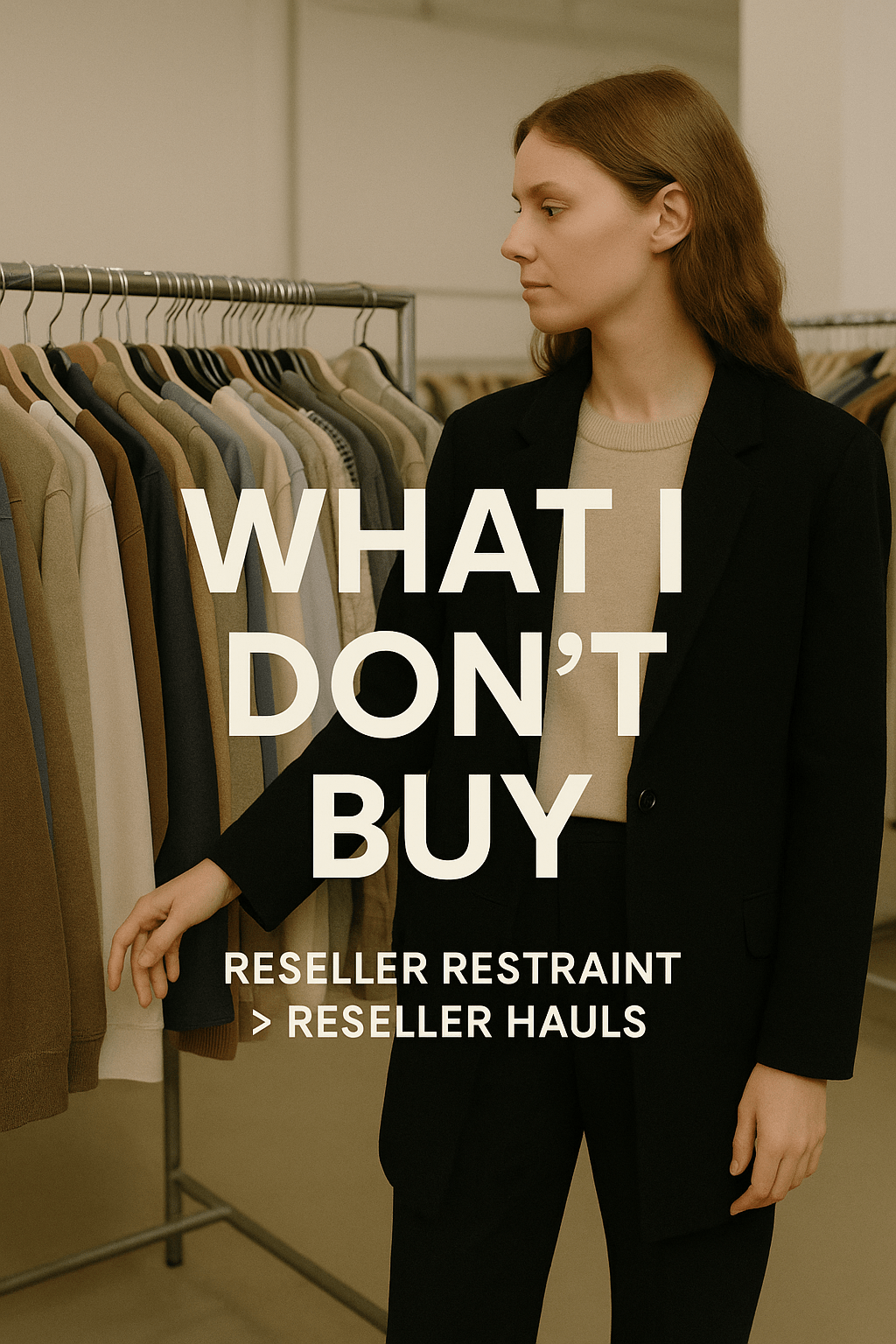
Every time I go sourcing, I leave with less than I could buy — on purpose.
I walk past racks full of “good brands.” Items in great condition. Pieces other resellers grab without hesitation. And I don’t feel even a little bit of FOMO anymore.
Because reselling taught me something that took years to learn: not everything that looks profitable actually is.
The fastest way to stall a resale business isn’t missing great finds. It’s buying too many “almost good” ones.
The real skill in reselling isn’t spotting brands. It’s knowing when to walk away.
––––––––––––––
Why “Good Brands” Don’t Always Make Good Resale Inventory
Early on, I assumed recognizable brands meant easy sales. That’s what most people are taught. But over time, I noticed a pattern.
The more popular a brand is, the more saturated the market becomes. Everyone is sourcing it. Everyone is listing it. And suddenly you’re racing to the bottom on price just to get noticed.
A “good brand” doesn’t guarantee:
• strong sell-through
• quick turnover
• or profit worth the effort
Market saturation turns once-great inventory into slow, space-taking clutter.
That realization was a turning point in how I approach sourcing and reselling sustainably instead of overbuying inventory.
––––––––––––––
The Thrift Store Items That Look Profitable but Never Sell
Some items photograph beautifully. They look like perfect flips. And then they sit.
I’ve learned to walk past:
• clothing with awkward fits that only work on a mannequin
• trends that peaked months ago but still look tempting
• pieces that rely on nostalgia without actual demand
• items that need heavy explanation to justify the price
If something needs a paragraph to convince a buyer it’s desirable, it’s already working against you.
This is where a lot of resellers get stuck — buying inventory that looks impressive but doesn’t move.
––––––––––––––
Why I Avoid Reselling Items I Have to Explain
One of the best filters I’ve adopted is simple: if I have to convince someone to want it, I don’t buy it.
Strong resale items don’t need defending. They meet a need, fit easily into someone’s life, and make sense at a glance.
Buyers scroll fast. They don’t want to decode your listing. They want clarity, confidence, and familiarity.
Understanding buyer psychology completely changed how I decide what’s actually worth picking up when I’m sourcing for resale.
––––––––––––––
The Hidden Cost of Overbuying as a Reseller
Overbuying doesn’t just affect profit. It affects everything else too.
Too much inventory leads to:
• storage stress
• decision fatigue
• slower listing
• more returns
• mental burnout
These costs rarely show up in income screenshots, but they quietly erode your business over time.
Buying less — and buying better — creates room for focus, consistency, and sustainability.
––––––––––––––
Reseller Restraint: The Skill That Builds Consistent Profit
Reseller restraint isn’t about scarcity or fear. It’s about strategy.
Knowing what to walk past:
• protects your time
• protects your energy
• protects your margins
Experienced resellers aren’t successful because they buy everything. They’re successful because they recognize patterns, understand demand, and trust their judgment.
This is the difference between constantly chasing trends and building a business that actually lasts.
––––––––––––––
How Walking Away Improved My Reselling Business
Once I stopped buying everything that “should sell,” my business got quieter — in the best way.
Inventory moved faster.
My listings felt more intentional.
My sourcing trips became less overwhelming.
And most importantly, reselling felt sustainable again.
If you’re curious, you can browse the types of pieces I actually choose to resell and how they align with a slower, more thoughtful approach to secondhand fashion.
––––––––––––––
Conclusion
Reselling isn’t about buying more. It’s about buying smarter — and sometimes buying nothing at all.
Walking away isn’t failure.
It’s experience.
And once you learn that, everything about your business starts to feel more steady, intentional, and sustainable.





 Premier_Finds
Leave a reply to Why Some Resellers Quit — and Others Quietly Last for Years – Premier_Finds Cancel reply