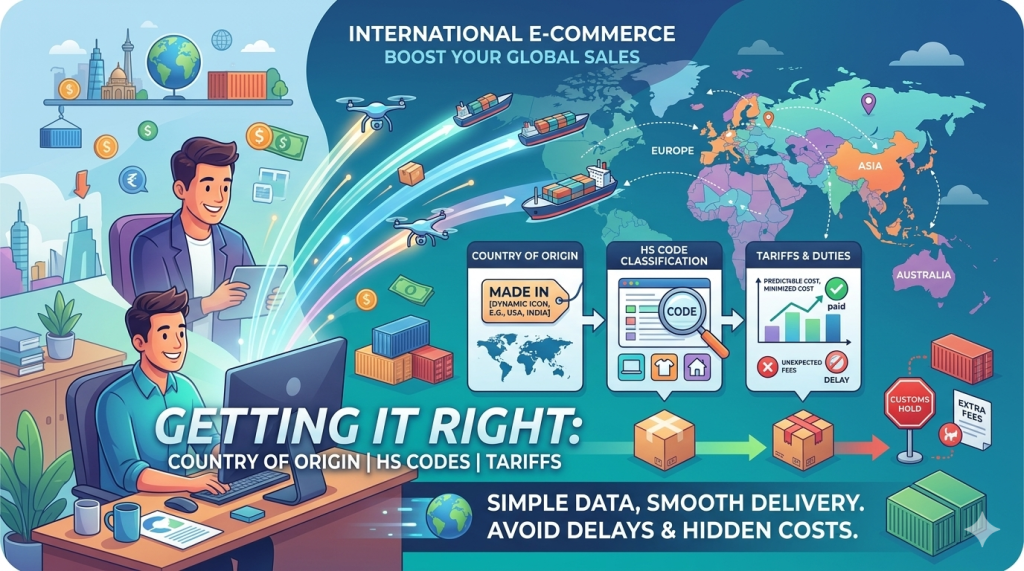
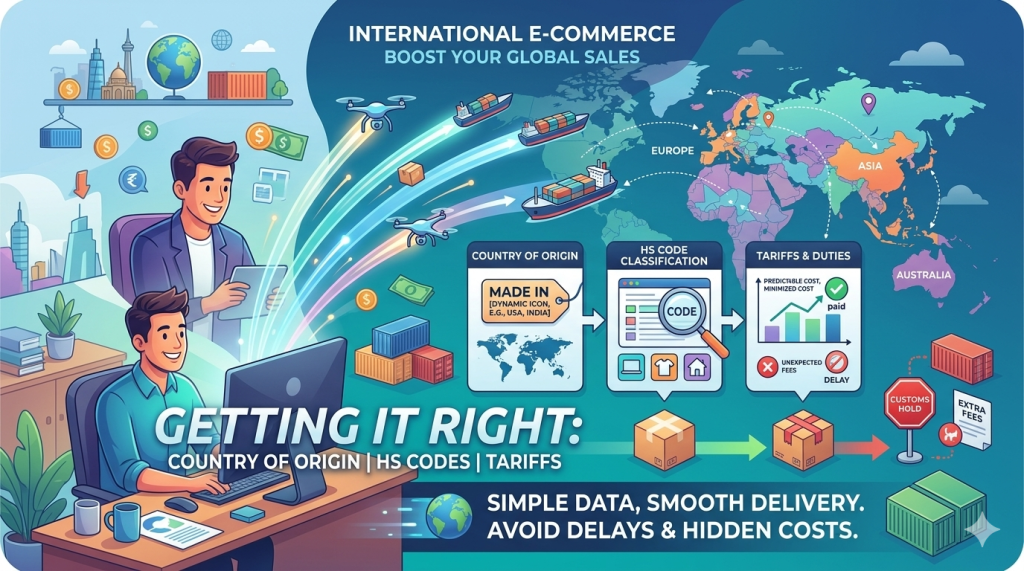
Selling internationally on eBay can feel like a gold rush, but if you don’t have your paperwork in order, it can quickly turn into a logistical headache. One of the most critical—and often misunderstood—fields in your listing is the Country of Origin (COO).
Here is a quick-start guide on what U.S. sellers must get right and, more importantly, why it matters for your bottom line.
1. Accurate “Country of Origin” (COO)
The Requirement: You must specify where the item was actually manufactured, produced, or grown—not where you are shipping it from.
• The Why: This is the “DNA” of your product for customs officials. International trade agreements (like USMCA) determine tax rates based on where a product was born. If you list a “Made in Italy” leather bag as “USA,” the buyer might get hit with massive, unexpected tariffs, or the item could be seized for fraudulent documentation.
2. Understanding Harmonized System (HS) Codes
The Requirement: Use the correct 6 to 10-digit code to classify your product.
• The Why: Customs doesn’t read your “Vintage 1990s Denim Jacket” title; they read the HS code. Using the wrong code can lead to “misclassification,” which results in overpaying duties or your package being held in “Customs Purgatory” while they try to figure out what’s inside.
3. Monitoring De Minimis Thresholds
The Requirement: Be aware of the value limits at which a country starts charging import taxes (e.g., the U.S. threshold was traditionally $800, but many countries are much lower).
• The Why: If you sell a $50 item to a country with a $20 threshold, your buyer will be asked to pay extra at the door. If they didn’t expect this, they may refuse the package. This leads to “Item Not Received” cases and negative feedback that can hurt your seller rating.
4. Overriding eBay’s “AI Guesses”
The Requirement: Manually verify the COO and Item Specifics rather than relying on eBay’s automated suggestions.
• The Why: eBay often uses AI to fill in missing data. If the AI incorrectly labels a product’s origin, you are legally responsible for that claim. For domestic sales, an incorrect COO could even lead to “Item Not as Described” returns if a collector was specifically looking for a version made in a certain country (e.g., a Japanese-made lens vs. a Chinese-made one).
5. Proper Documentation (CN22/CN23 Forms)
The Requirement: Ensure your shipping labels include a clear, honest description of the contents and their value.
• The Why: Discrepancies between the eBay sale price and the declared value on the form are a major red flag for fraud. “Gifting” an item to help a buyer avoid taxes is a federal offense. Correct documentation ensures the package moves through the “Green Channel” (fast track) rather than the “Red Channel” (manual inspection).
The Bottom Line: Why should you care?
Getting these details right isn’t just about following rules; it’s about Customer Experience.
An international buyer who receives their item quickly without hidden fees is a repeat customer. A buyer who has to drive to a customs office and pay a $40 surprise tax is a buyer who will never shop with you again—and might leave a stinging 1-star review on your way out.
Pro Tip: If you want to skip the math, use eBay International Shipping (eIS). eBay takes over the liability for customs and returns once the item reaches their domestic hub, which can save you a world of stress!



 Premier_Finds
Leave a comment