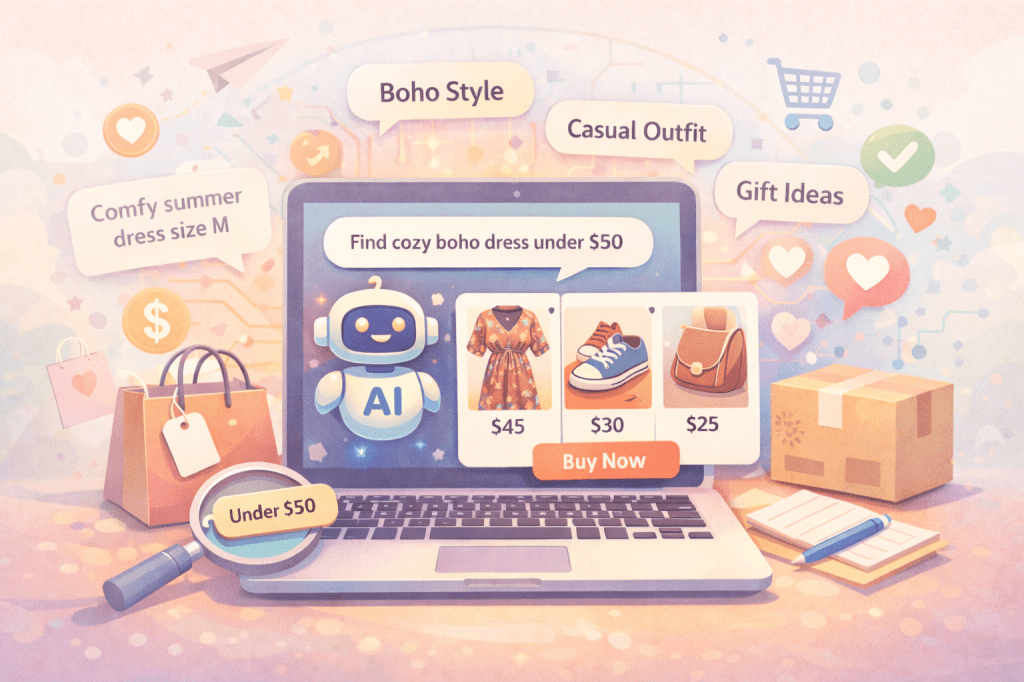
Learn how long-tail, conversational keywords can help eBay, Poshmark, and Mercari sellers boost visibility as AI shopping platforms like ChatGPT emerge. Smart SEO equals more buyers, less guessing.
The Future of Ecommerce Isn’t Search — It’s Conversation
For years, online shopping looked like this:
Open app Type “Levi’s jeans women” Scroll through a million listings Cry a little Eventually buy something
But with AI platforms — including chat-based shopping, voice assistants, and generative product discovery — buyers are shifting from search terms to spoken language.
Instead of typing “Levi’s 501 jeans,” a shopper might now ask:
“Find me sustainable vintage Levi’s that fit curvy bodies and are under $60.”
That entire sentence is a keyword — and if your listings aren’t optimized for that style of query, you’re invisible in the next wave of ecommerce.
What Exactly Are “Long-Tail, Conversational Keywords”?
Long-tail search terms:
✔ are longer than 3 words
✔ describe intent or attributes
✔ mimic natural speech
✔ match how shoppers talk
Examples for clothing:
“baggy y2k jeans for tall teens” “quiet luxury cashmere sweater women’s small” “maxi dress for beach vacation under $40” “boho wedding guest dress summer size large” “sustainable denim shorts with stretch”
See how these sound like questions someone would actually ask in real life? That’s the point.
AI doesn’t just match data — it matches intent.
Why AI Loves Conversational Keywords
AI doesn’t think like a search bar. It thinks contextually.
Shoppers are asking AI platforms for:
styling advice gifting recommendations size/fit solutions sustainable fashion options event-specific outfits
So when your listing title or description answers a problem, AI considers you relevant.
If a buyer asks:
“What should I wear to a summer wedding that’s classy but comfy?”
AI isn’t returning a brand name — it’s returning a solution.
How This Helps Marketplace Sellers (Yes, Even Small Ones)
You don’t need a Shopify store or enterprise budget. If you list on:
✔ eBay
✔ Poshmark
✔ Mercari
✔ Depop
✔ Vinted
✔ Etsy
…you’re about to benefit from platforms feeding structured product data into AI shopping tools.
When your listings are conversational and detailed, AI can:
✨ surface your items
✨ recommend your listings
✨ match by intent (not just brand)
✨ drive niche buyers to your store
It’s like SEO, but smarter and more human.
Simple Formula for Conversational Listing Titles
Here’s a plug-and-play structure you can steal:
[Style/Trend] + [Item] + [Fit/Material] + [Buyer Intent/Context] + [Size]
Examples:
Boho wrap maxi dress floral breathable wedding guest spring size M Quiet luxury cashmere sweater neutral minimalist office capsule size S Y2K baggy denim jeans low rise distressed streetwear festival size 28
Notice we’re stacking:
✔ trend keywords
✔ functional keywords
✔ situational keywords
These are exactly what conversation-based AI systems latch onto.
Don’t Forget the Descriptions
Descriptions should answer:
Who is it for?
What problem does it solve?
When would someone wear it?
Why is it special?
Example snippet:
Perfect for summer vacations, brunch dates, or effortless weekend style. Lightweight linen blend keeps you cool and comfy, while the relaxed fit flatters curvy and petite bodies alike.
That’s how shoppers talk — and how AIs listen.
So, Will AI Actually Drive Buyers to Your Store?
Short answer: Yes — if you make it easy.
AI shopping tools will favor listings that are:
✔ structured
✔ descriptive
✔ conversational
✔ accurate
✔ keyword-rich
If you optimize now, you’re essentially training AI to recognize your inventory category — and that’s a long-term advantage.
Final Takeaway: Optimize Today, Benefit Tomorrow
If you only change one thing this year, make it this:
Start optimizing your listings with long-tail, conversational keywords and watch how AI platforms begin to drive buyers straight to your store.
It’s not about beating big brands — it’s about becoming discoverable in the new language of ecommerce: natural conversation.
The best part?
It costs zero dollars and takes zero tech tools — just smarter listing habits.



 Premier_Finds
Leave a comment