eBay has long been the heavyweight of online reselling — a platform with millions of active sellers and a massive global reach. But for fashion resellers in 2025, that size might be more of a burden than a blessing. As the platform continues to grow more saturated and fees pile up, many sellers are discovering that newer platforms like Mercari, Depop, Poshmark, and Etsy can offer higher profits and less competition.
eBay’s Reach: Massive Audience, Massive Competition
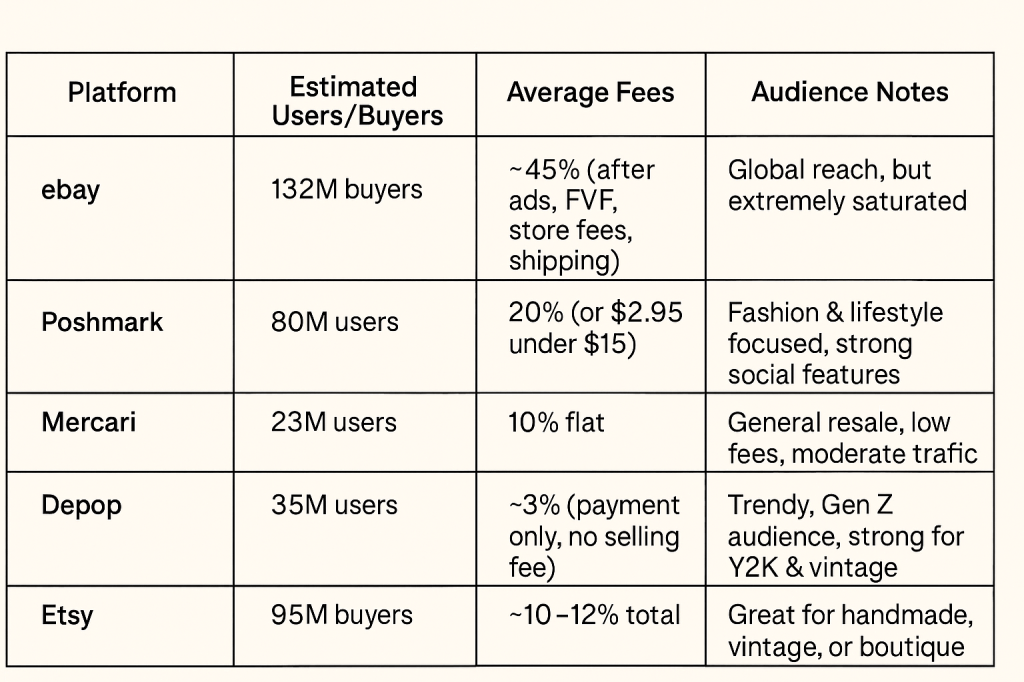
eBay currently hosts over 2.3 billion active listings across all categories, with roughly 18 million sellers worldwide and more than 132 million active buyers. In the fashion category alone, millions of duplicate listings compete for attention every day. While eBay’s search algorithm rewards active sellers who promote listings and update daily, the sheer volume makes it hard for even experienced sellers to stand out.
That reach comes at a cost — literally. To maintain visibility, most sellers rely on Promoted Listings, which can take another 5–15% off your earnings on top of eBay’s already complex fee structure.
How eBay Compares to Other Platforms in 2025
Here’s how the major reselling platforms stack up in terms of audience reach, fee structure, and profit margins for fashion sellers:
Fee Breakdown: Where Your Profit Goes
Your recent eBay sale breakdown illustrates the issue perfectly:
Sale price: $29.99 Shipping: $6.00 Sales tax: $2.40 eBay’s take: –$4.79 transaction fee, –$5.24 shipping label, –$6.18 ad fee Net Earnings: $19.78
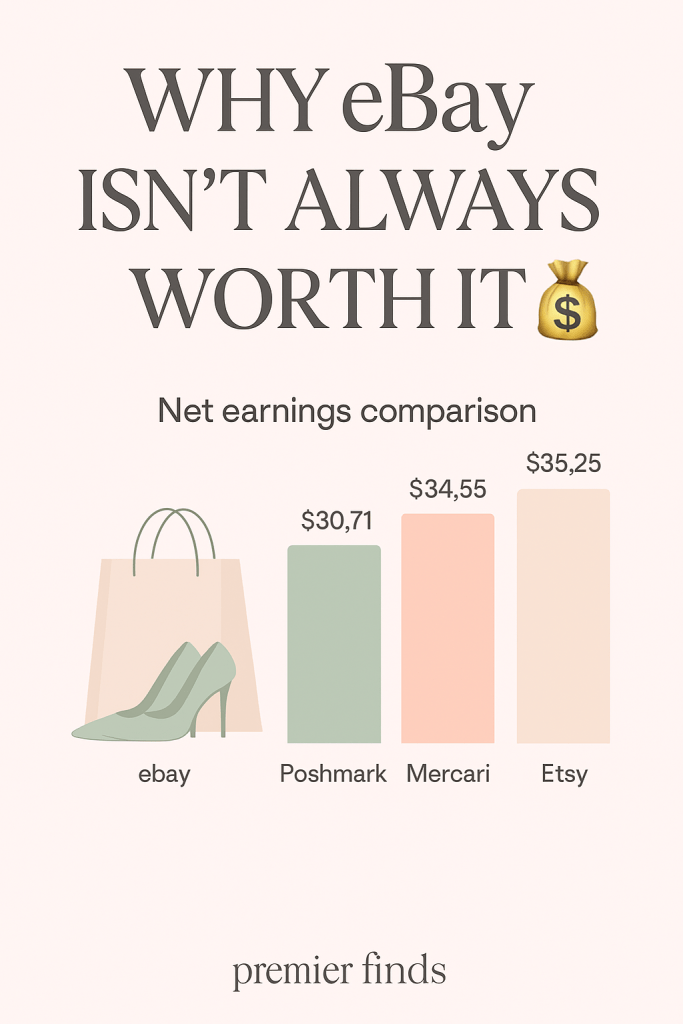
That means over 48% of the total buyer payment disappeared into platform and shipping costs — before packaging or item cost. Compare that with other platforms:
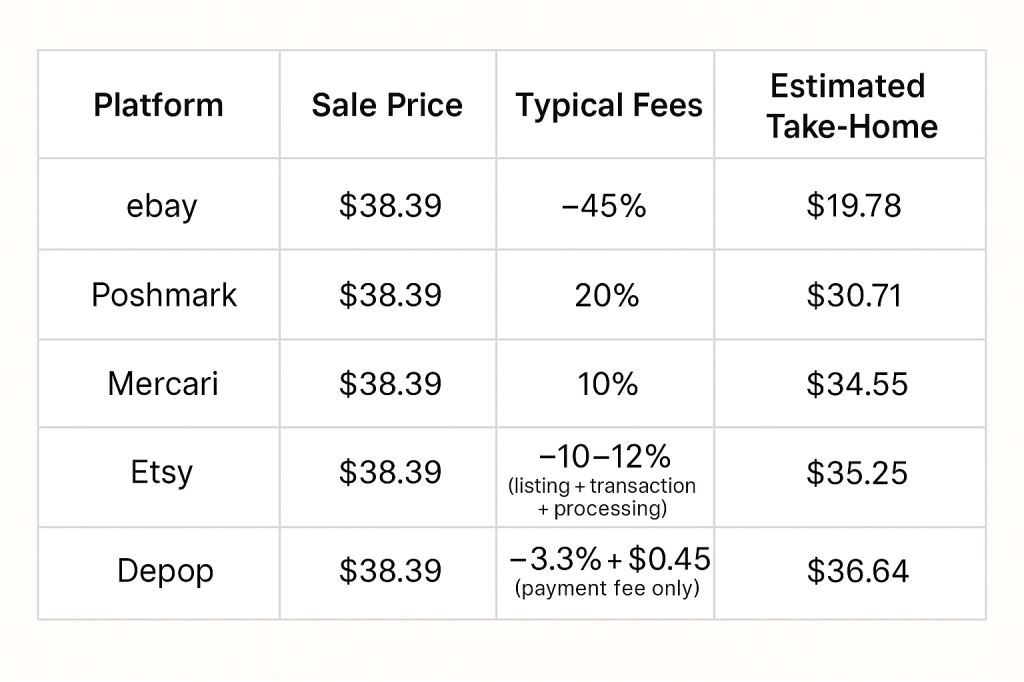
Here is an example of an eBay sale breakdown as it looks today in 2025:

Etsy’s Role in 2025: The Quiet Contender
Etsy often gets overlooked in reseller discussions because it’s associated with handmade goods — but it’s quietly one of the most profitable platforms for vintage fashion and boutique resellers.
Etsy charges $0.20 per listing, 6.5% transaction fee, and 3% + $0.25 payment processing, totaling around 10–12%. With roughly 95 million buyers, Etsy gives exposure to design-minded shoppers who are often willing to pay higher prices for curated or sustainable fashion.
The platform rewards branding and niche curation. Sellers with cohesive shop aesthetics and clear photography tend to perform well without needing paid promotion.
Market Saturation: The eBay Problem
eBay’s advantage is visibility, but its oversaturation hurts small sellers:
Top-rated sellers and stores dominate search results through promoted listings. Millions of nearly identical fast fashion pieces flood search pages. Fees (transaction, store, ad) can add up to nearly half of the sale price. New or casual sellers struggle to gain traction without costly advertising.
As a result, even though eBay reaches more buyers, many sellers earn less profit per item than on smaller platforms with fewer fees and less competition.
Platforms with Room to Grow
While eBay’s growth has plateaued, Depop, Mercari, and Etsy are expanding their active seller bases while maintaining friendlier fee structures.
Each offers unique advantages:
Depop: Ideal for Y2K, vintage, streetwear, and sustainable fashion. Almost no seller fees. Mercari: Simple, no-listing-fee model with a straightforward 10% commission. Etsy: Excellent for vintage or handmade-inspired apparel. High buyer trust and strong SEO reach. Poshmark: Still powerful for brand-name fashion, but competitive in its own way (sharing, party participation, etc.).
Where to Focus as a Reseller in 2025
If your goal is profitability and visibility, not just volume, your focus should be shifting away from eBay-only selling.
Instead:
Diversify — Cross-list inventory to multiple marketplaces to test where your niche performs best. Leverage Depop and Etsy for curated or niche inventory that stands out visually. Use eBay selectively — for high-ticket, collectible, or international items that benefit from its vast buyer base. Track your net profit per platform rather than total sales. Reduce paid ad reliance on eBay and instead invest time in better photos, keywords, and SEO optimization.
Conclusion: Rethinking Where “Reach” Really Pays
Yes, eBay is the biggest — but in 2025, bigger doesn’t always mean better.
For fashion resellers, platform saturation and complex fee layers can erode profits faster than you realize. Newer, leaner platforms like Depop, Mercari, and Etsy offer better margins, fresher audiences, and growing buyer communities hungry for curated, sustainable fashion.
The smartest resellers now spread their reach, use eBay strategically, and lean into platforms where creativity and brand voice matter more than paid promotion.
That’s the real future of reselling — less saturation, more sustainability, and smarter selling.




 Premier_Finds
Leave a comment