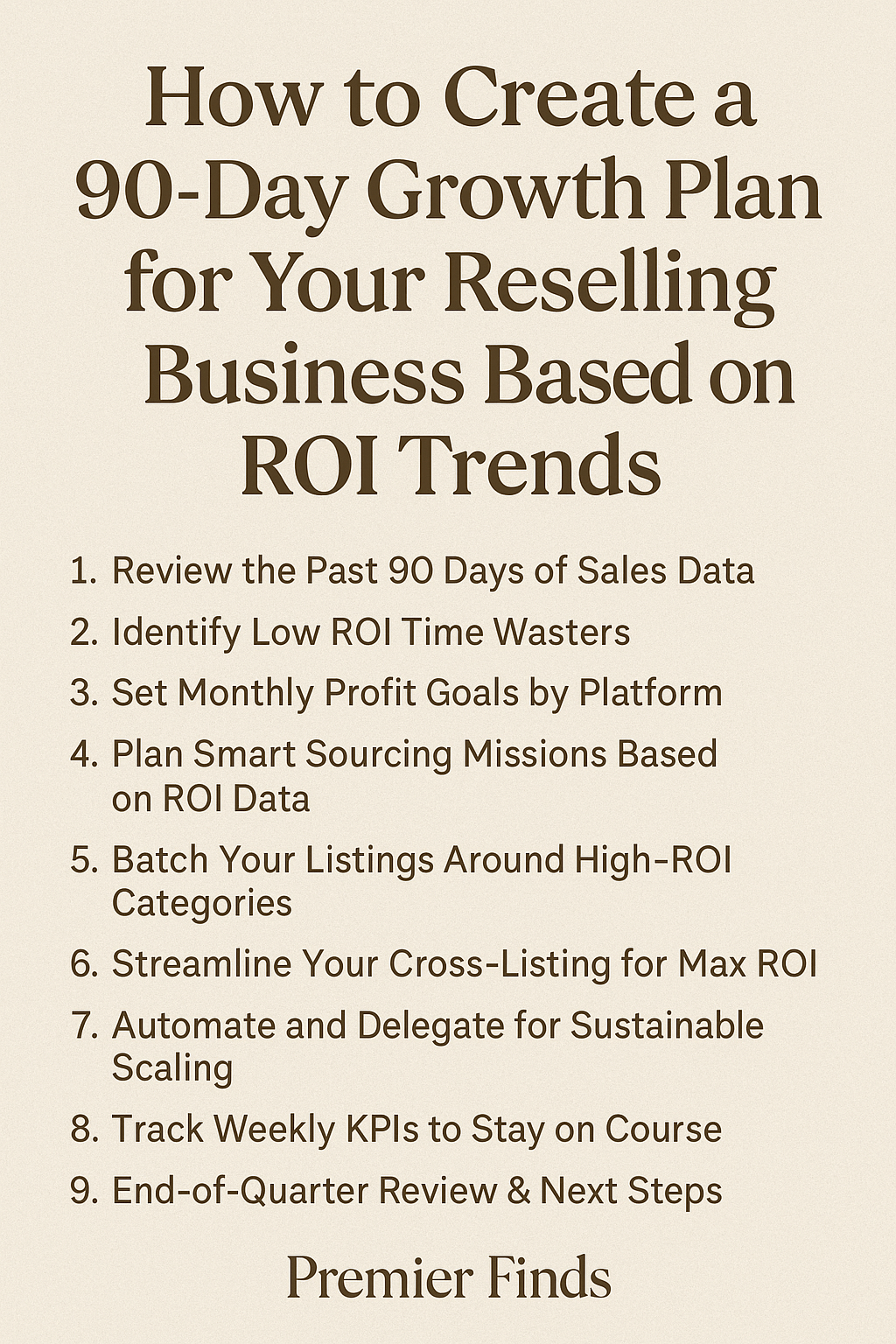

If you’re a full-time reseller or side hustler looking to scale your business, tracking your ROI (Return on Investment) is your secret weapon. A 90-day growth plan built around ROI trends can help you pivot strategically, double down on what’s working, and make data-backed decisions that increase profit—without burning out.
Here’s how to create a smart, sustainable 90-day reseller growth plan, step by step:
1. Review the Past 90 Days of Sales Data
Before planning forward, look back.
Pull sales reports from eBay, Poshmark, Mercari, or your cross-listing tool (like Flyp or Vendoo). Calculate ROI per item and per category (ROI = [Profit ÷ Cost] x 100). Identify high-performing categories, SKUs, brands, and platforms.
Pro Tip: Use a simple Google Sheets tracker or a tool like Seller Insight to visualize trends. Look for your top 20% of listings that brought in 80% of your profit (Pareto Principle).
2. Identify Low ROI Time Wasters
Not all inventory is created equal.
Which items took too long to sell? What platforms drained time with low returns? Are certain sourcing methods (like bins vs estate sales) giving poor ROI?
Drop or pause these low-yield strategies so you can invest more energy in what’s actually working.
3. Set Monthly Profit Goals by Platform
Now that you know what sells best, reverse-engineer your income goals.
Break down your quarterly profit goal into monthly targets. Assign each platform (eBay, Mercari, etc.) a % goal based on past ROI. Don’t forget to factor in seller fees, shipping costs, and promoted listings.
Example: If eBay brings in 70% of your revenue, allocate your sourcing and listing time accordingly.
4. Plan Smart Sourcing Missions Based on ROI Data
Use your data to build smarter thrift hauls or palette buys.
Source more of what gives you at least 3x ROI. Adjust your niche if a new trend (like Y2K beaded bags or Barbiecore dresses) is rising in your top sellers. Avoid emotional buying and stick to your profitable style tags, categories, and brands.
5. Batch Your Listings Around High-ROI Categories
Don’t just list randomly—list with intention.
Group your new inventory by category or trend (e.g. boho dresses, vintage tees, home décor). Batch your photography, measurements, and cross-listing to save time and stay consistent. Use SEO-optimized titles with style tags like Linen, Cottagecore, Festival, or Quiet Luxury to improve visibility.
6. Streamline Your Cross-Listing for Max ROI
Cross-listing can grow your reach—but not if it eats into your profits.
Use a cross-listing tool to automate bulk uploads and inventory syncing. Track ROI by platform: If Depop isn’t pulling its weight, reduce listing volume there. Focus on platforms that give you the best return and quickest sell-through.
7. Automate and Delegate for Sustainable Scaling
You can’t grow if you’re micromanaging every task.
Schedule social media content in batches (Pinterest, Instagram, TikTok). Use saved templates for eBay listing descriptions and titles. Consider outsourcing: A virtual assistant can help with relisting, photo editing, or data entry.
8. Track Weekly KPIs to Stay on Course
Check in weekly—not just monthly—to track:
Gross sales ROI by category Sell-through rate Platform performance Time spent vs. profit gained
This keeps your 90-day plan agile and lets you pivot fast if trends shift.
9. End-of-Quarter Review & Next Steps
At the end of your 90-day sprint, ask:
Did you hit your profit and ROI goals? What sold better than expected? What sourcing or marketing changes worked?
Refine your next 90-day plan based on this review. With every cycle, you’re not just growing—you’re evolving smarter.
Final Thoughts: Plan With Purpose, Sell With Strategy
A 90-day growth plan built around ROI isn’t just about numbers—it’s about clarity, confidence, and control. By tracking what works and aligning your time with your profit, you’ll build a more sustainable, scalable reselling business.




 Premier_Finds
Leave a comment