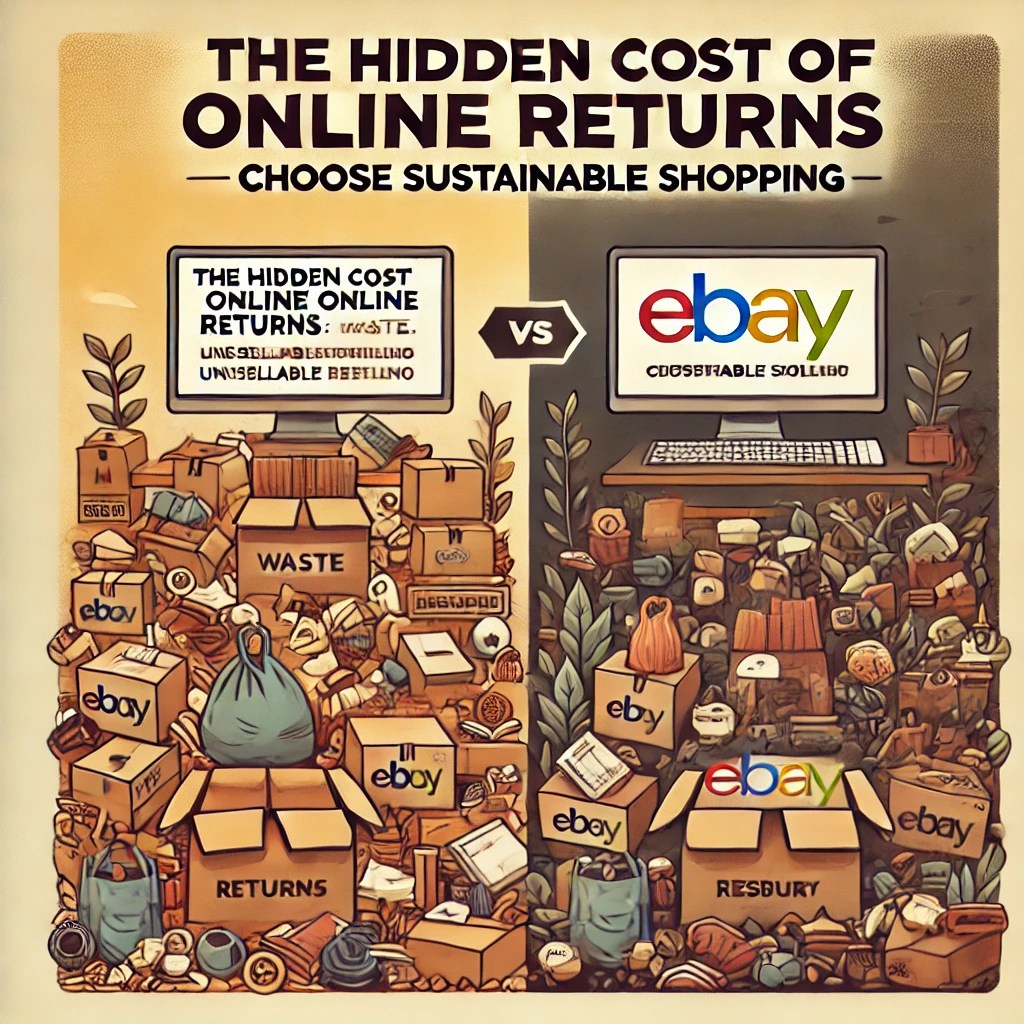
Online shopping has revolutionized how we buy and sell, offering convenience and variety at our fingertips. But with the ease of online purchasing comes a hidden cost: the environmental impact of returns. Here’s a deep dive into why online purchase returns are so problematic for the planet, how major platforms like Amazon and eBay handle them, and what you can do to shop more sustainably.
1. The Environmental Toll of Online Returns
Every time an item is returned, it’s not just the original shipment that affects the environment but the entire reverse logistics process. Consider the following:
- Transportation Emissions: Returns require additional shipping, often across long distances, which increases carbon emissions.
- Packaging Waste: Returned items often need new packaging, adding to the growing mountains of waste.
- Wasteful Disposal: A significant portion of returned goods never make it back to shelves, ending up in landfills instead.
In the U.S. alone, returns contribute to 5 billion pounds of waste annually and emit 15 million metric tons of carbon dioxide. That’s equivalent to the emissions of over 3 million cars for a year!
2. How Amazon Handles Returns
Amazon, the world’s largest online retailer, processes millions of returns every year. Here’s what typically happens:
- Liquidation: Many returned items are sold to liquidation companies, which resell them at a fraction of the price. While this avoids immediate waste, it often leads to overconsumption.
- Landfills: Items that are deemed unsellable or not worth processing end up in landfills, contributing to waste and environmental degradation.
- Resale at Reduced Prices: Some returns are inspected, refurbished, and sold as “open-box” or “used” items at a discount.
- Donation Programs: Amazon has initiatives to donate unsellable goods to charities, but this represents a small fraction of returns.
3. How eBay’s Approach Differs
Unlike Amazon, eBay operates as a peer-to-peer marketplace where individual sellers control returns. Here’s why eBay’s return system can be more environmentally friendly:
- Direct Resale: Returned items on eBay are typically resold directly by sellers, minimizing the waste associated with mass processing.
- Less Transportation: Sellers are often more mindful about returns, reducing unnecessary shipments.
- No Centralized Waste: eBay’s decentralized model means fewer items end up in landfills compared to Amazon’s massive return centers.
4. Why Returns Are an Environmental Crisis
The sheer volume of returns exacerbates their environmental impact:
- High Return Rates: Fashion items, for example, have return rates as high as 50%. Many of these items are discarded, especially fast fashion.
- Quality Issues: Returned items are often no longer in “new” condition, making them harder to resell.
- Consumer Habits: The rise of “bracketing” (ordering multiple sizes or styles and returning what doesn’t fit) contributes significantly to returns.
5. How You Can Help Reduce Return Waste
While the return process may feel out of your control, small changes in your shopping habits can make a big difference:
- Shop Thoughtfully: Avoid impulse purchases and research items thoroughly before buying.
- Choose Platforms Wisely: Opt for marketplaces like eBay where returns are less wasteful.
- Support Sustainable Sellers: Buy from sellers who emphasize eco-friendly practices.
- Be Mindful of Packaging: Reuse and recycle packaging whenever possible.
Call to Action: Make Sustainable Choices with Premier Finds
Every online purchase has an impact. At Premier Finds, we’re committed to sustainability. Explore our curated collection of pre-loved and unique items, and shop with confidence knowing your purchases help reduce waste. Together, we can make a difference for the planet.
Keywords: online returns environmental impact, sustainable shopping, Amazon returns, eBay returns, liquidation waste, reduce returns, eco-friendly shopping, sustainable e-commerce, shop second-hand, Premier Finds, waste reduction, carbon emissions.




 Premier_Finds
Leave a comment